
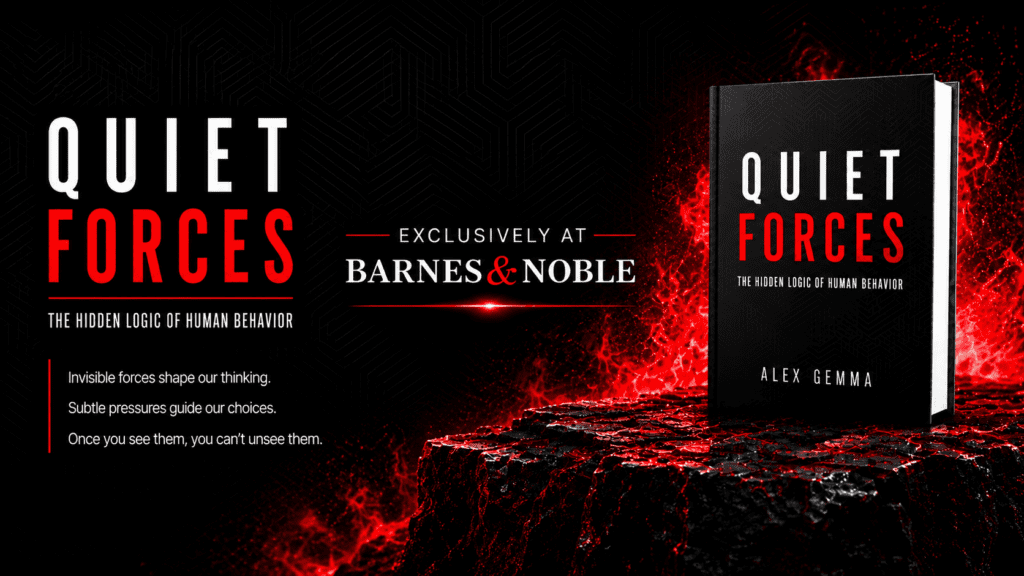
Quiet Forces: The Hidden Logic of Human Behavior
In Quiet Forces: The Hidden Logic of Human Behavior, Alex Gemma examines the invisible pressures that quietly shape the way people think, behave, adapt, and move through modern life. Through a collection of sharp, psychologically driven essays, the book explores the hidden mechanisms behind conformity, authority, social conditioning, emotional restraint, normalization, strategic behavior, and the subtle forces that influence human decision-making long before people realize they are being influenced at all.
Rather than approaching these topics through ideology, politics, or self-help clichés, Quiet Forces takes a colder, more observational lens. The essays dissect everyday realities that most people sense but rarely articulate: why systems gain trust even when they are poorly understood, why people tolerate environments that quietly diminish them, why social pressure often operates without words, why procedure can overpower common sense, and why many individuals mistake repetition for truth. Throughout the book, Gemma examines the silent architecture beneath ordinary life—the pressures, incentives, fears, habits, and invisible negotiations that shape modern behavior from the background.
At its core, the book is about awareness. Not rebellion for the sake of rebellion, and not cynicism disguised as intelligence, but the ability to recognize the quiet dynamics operating beneath surface-level reality. Some essays focus on power and restraint. Others explore strategic thinking, emotional discipline, social adaptation, institutional behavior, modern identity, or the hidden economics behind human interaction. Together, they form a broader picture of how people unconsciously adjust themselves to the environments around them—and how those environments quietly reshape human behavior over time.
Written in a cinematic, restrained style that blends philosophy, psychology, observation, and real-world insight, Quiet Forces avoids emotional grandstanding in favor of clarity and precision. The result is a book that feels less like a lecture and more like a series of controlled observations about the world people already live in—but may not fully see.
For readers interested in human behavior, modern life, psychological insight, and the unseen pressures that shape everyday decisions, Quiet Forces offers a thoughtful and unsettling look at the hidden forces most people never notice until they begin looking for them.